Deming's Lasting Influence: 14 Points, 75 Years On
Three quarters of a century after his Japan lectures, W. Edwards Deming's principles still read like a manifesto for modern leadership.
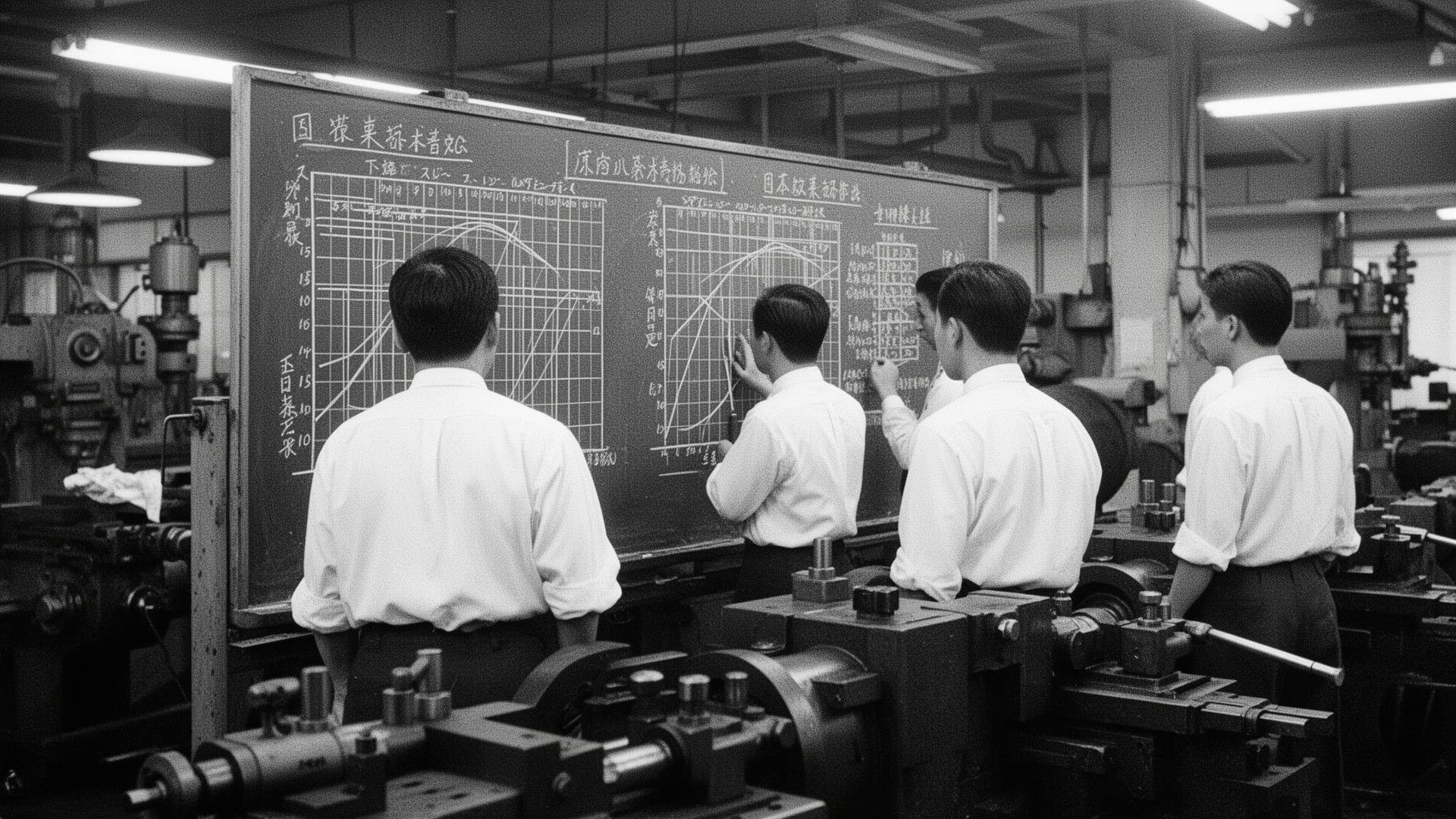
When W. Edwards Deming arrived in post-war Japan in the summer of 1950, he carried a deceptively simple message to a country desperate for a new industrial story: most of what we call a 'people problem' is really a system problem. Seventy-five years later, that message has lost none of its bite — and arguably, it has never been more relevant.
The 14 Points are usually presented as a tidy list, the kind of thing that ends up on a laminated card in a training room. Read them that way and they look almost quaint. Read them as a single sustained argument, however, and a sharper thesis emerges: management's primary job is to design systems where doing the right thing is the easy thing. Drive out fear. Break down silos. Cease dependence on inspection. Stop awarding business on price tag alone. Build quality in from the start.
What makes Deming's work endure is its refusal to flatter the reader. He did not blame workers. He did not blame customers. He blamed managers — politely, persistently, and with data. Variation in output, he argued, is overwhelmingly the result of the system the worker is given. Punish the worker and you teach them to hide problems. Fix the system and the problems vanish.
It is striking how contemporary the 14 Points feel in the age of OKRs, real-time dashboards and AI co-pilots. Deming would have recognised the modern obsession with rankings, stack-ranked performance reviews and quarterly targets. He would also, almost certainly, have warned us — again — that we are optimising for the wrong things, and that short-term metrics tend to consume the long-term capability that produced them.
Japanese industry famously took the lectures seriously. Toyota, Sony and a generation of post-war engineers built entire production philosophies around statistical thinking and continuous improvement. The Deming Prize, awarded annually since 1951, became one of the most coveted honours in global manufacturing. The West, by contrast, took decades to catch up — and in some sectors, arguably still hasn't.
The deeper lesson is methodological. Deming taught the world that quality is not a department, a poster, or a slogan. It is a way of seeing. It is the discipline of asking, again and again, what the data actually says, and having the humility to change your mind when the answer surprises you.
On the seventy-fifth anniversary of those Japan lectures, the most fitting tribute is not to recite the 14 Points. It is to pick the two or three that your organisation is currently breaking — and fix them.